Copyright © 2025
George R. Morgan
Dog Food Manufacturing
Commercial dog food can look simple when all we see is the finished
bag, can, or pouch, but a lot happens before it reaches the bowl.
Ingredients are selected, mixed, cooked or processed, packaged,
labeled, stored, and shipped. This page is not about choosing one
brand over another or replacing advice from your veterinarian. It is
meant to help Westie owners understand the basic differences between
common commercial foods, what label language can and cannot tell
you, and why manufacturing, storage, recalls, and your dog’s
individual health all matter.
Commercial Dog Food Comes in Different Forms
Kibble, wet food, semi-moist foods, and other commercial diets are made differently, and those differences affect texture, moisture,
packaging, storage, cost, and convenience. Kibble is usually dry and shelf-stable once opened when stored properly. Wet food has more
moisture, is sealed in cans, trays, or pouches, and usually needs refrigeration after opening. Some owners use one type, while others combine
foods. The right choice still depends on your Westie’s age, health, teeth, digestion, allergies, activity level, and your veterinarian’s guidance.
How Kibble Is Generally Made
Most dry kibble is made by combining ingredients into a dough-like mixture, cooking it under heat and pressure, shaping it into pieces,
drying it, and then adding fats, flavors, or nutrient coatings according to the manufacturer’s formula. The goal is to create a food that is
consistent from bag to bag and stable enough to store. That does not mean every kibble is the same. Ingredients, quality controls,
formulation standards, testing, packaging, and how the food is stored after purchase all make a difference.
You may see advertisements claiming that kibble is bad because the heat used in manufacturing destroys the nutrients. Heat and pressure
can affect some heat-sensitive nutrients and aspects of protein quality, so the claim is not based on nothing. However, that does not mean
finished kibble is nutritionally destroyed or automatically poor quality. Responsible manufacturers account for processing losses through
formulation, added vitamins and minerals, testing, and quality control. The better question is not whether a food was heated, but whether
the finished food is safe, complete, balanced, properly stored, and appropriate for your individual dog. Be cautious of ads that turn a real
manufacturing issue into a simple sales pitch. If you still have doubts about a particular kibble product, ask your veterinarian or a
veterinary nutritionist to help you evaluate whether it is appropriate for your Westie.
How Wet Food Is Generally Made
Wet dog food is usually blended, portioned into cans, trays, or pouches, sealed, and heated in the package to help make the food shelf-stable
until it is opened. Because it contains much more moisture than kibble, it can be appealing to some dogs and may be easier for certain dogs
to chew. After opening, wet food should be handled like a perishable food: cover it, refrigerate it, follow the label directions, and discard
leftovers that have been sitting out too long.
What “Complete and Balanced” Means
A commercial dog food label may say the food is “complete and balanced” for a specific life stage, such as growth, adult maintenance, or all
life stages. That statement is important because it means the food is intended to meet recognized nutrient standards when fed as directed. It
does not mean the food is perfect for every dog, that every ingredient will agree with your Westie, or that veterinary advice is unnecessary. It
is a starting point for evaluating whether a food is appropriate.
Labels can also tell you the intended species, life stage, ingredient list, feeding directions, guaranteed analysis, calorie information,
manufacturer or distributor, and package quantity. They are useful, but they are not the whole story. If your Westie has allergies, digestive
problems, weight concerns, dental issues, or another medical condition, ask your veterinarian to help interpret the label in light of your dog’s
needs.
Manufacturing, Storage, and Recalls Matter
Because commercial food is made in batches, consistency and quality control are important. Manufacturers may use ingredient
specifications, cooking controls, nutrient testing, sanitation procedures, packaging checks, and traceability systems to reduce risk. Even so,
no process is perfect. Packages can be damaged, food can be stored improperly, and recalls can happen. Buy food from reliable sources,
check dates and packaging, store dry food in a cool dry place, refrigerate opened wet food, and stop feeding any food that smells unusual,
looks moldy, has pests, or seems to make your dog sick.
Keep the bag, can, pouch, or lot information until the food is finished. If a problem is suspected, that information may help your
veterinarian, the store, or the manufacturer identify the product. If your Westie vomits, has diarrhea, refuses food, becomes unusually tired,
develops itching, or shows any other concerning change after a food change or new package, contact your veterinarian.
Homemade Food Is Different from Manufactured Food
Homemade meals give owners direct control over ingredients, but they do not have the same manufacturing controls, nutritional
formulation, batch testing, or label standards found in commercial foods. That does not make homemade food automatically bad, and it does
not make commercial food automatically good. It simply means the risks are different. Long-term homemade diets should be formulated
with your veterinarian and, ideally, a board-certified veterinary nutritionist so they are complete, balanced, and appropriate for your
individual dog. We cover homemade feeding in more detail on a separate feeding page.
When Your Westie Has Special Food Needs
Westies can be prone to allergies, skin problems, digestive issues, and other health concerns that may affect food choices. In those situations,
the manufacturing process is only one part of the decision. Your veterinarian can help you decide whether a regular commercial food,
prescription diet, limited-ingredient food, hydrolyzed diet, or carefully formulated homemade plan is appropriate. If food allergies are
suspected, do not rely on trial and error alone; a structured plan gives better information and is safer for your dog.
Final Thoughts
Dog food manufacturing is not something most of us see, but it affects what ends up in our Westie’s bowl. Commercial foods are made
through controlled processes, packaged for storage, and labeled to explain how the food is intended to be used. Those controls are helpful,
but they do not replace careful label reading, proper storage, watching how your own dog responds, and involving your veterinarian when
health concerns are part of the decision. The goal is not to chase trends or assume one type of food is best for every Westie. The goal is to
understand the options well enough to make thoughtful, safe choices for the dog you love.
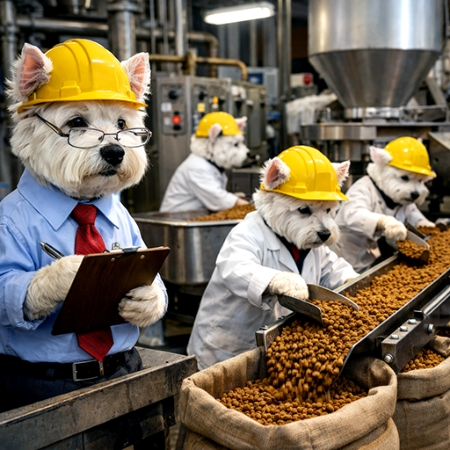
Commercial Dog Food Comes in Different Forms
Kibble, wet food, semi-moist foods, and other commercial diets are made differently, and those differences affect texture, moisture,
packaging, storage, cost, and convenience. Kibble is usually dry and shelf-stable once opened when stored properly. Wet food has more
moisture, is sealed in cans, trays, or pouches, and usually needs refrigeration after opening. Some owners use one type, while others combine
foods. The right choice still depends on your Westie’s age, health, teeth, digestion, allergies, activity level, and your veterinarian’s guidance.
How Kibble Is Generally Made
Most dry kibble is made by combining ingredients into a dough-like mixture, cooking it under heat and pressure, shaping it into pieces,
drying it, and then adding fats, flavors, or nutrient coatings according to the manufacturer’s formula. The goal is to create a food that is
consistent from bag to bag and stable enough to store. That does not mean every kibble is the same. Ingredients, quality controls,
formulation standards, testing, packaging, and how the food is stored after purchase all make a difference.
You may see advertisements claiming that kibble is bad because the heat used in manufacturing destroys the nutrients. Heat and pressure
can affect some heat-sensitive nutrients and aspects of protein quality, so the claim is not based on nothing. However, that does not mean
finished kibble is nutritionally destroyed or automatically poor quality. Responsible manufacturers account for processing losses through
formulation, added vitamins and minerals, testing, and quality control. The better question is not whether a food was heated, but whether
the finished food is safe, complete, balanced, properly stored, and appropriate for your individual dog. Be cautious of ads that turn a real
manufacturing issue into a simple sales pitch. If you still have doubts about a particular kibble product, ask your veterinarian or a
veterinary nutritionist to help you evaluate whether it is appropriate for your Westie.
How Wet Food Is Generally Made
Wet dog food is usually blended, portioned into cans, trays, or pouches, sealed, and heated in the package to help make the food shelf-stable
until it is opened. Because it contains much more moisture than kibble, it can be appealing to some dogs and may be easier for certain dogs
to chew. After opening, wet food should be handled like a perishable food: cover it, refrigerate it, follow the label directions, and discard
leftovers that have been sitting out too long.
What “Complete and Balanced” Means
A commercial dog food label may say the food is “complete and balanced” for a specific life stage, such as growth, adult maintenance, or all
life stages. That statement is important because it means the food is intended to meet recognized nutrient standards when fed as directed. It
does not mean the food is perfect for every dog, that every ingredient will agree with your Westie, or that veterinary advice is unnecessary. It
is a starting point for evaluating whether a food is appropriate.
Labels can also tell you the intended species, life stage, ingredient list, feeding directions, guaranteed analysis, calorie information,
manufacturer or distributor, and package quantity. They are useful, but they are not the whole story. If your Westie has allergies, digestive
problems, weight concerns, dental issues, or another medical condition, ask your veterinarian to help interpret the label in light of your dog’s
needs.
Manufacturing, Storage, and Recalls Matter
Because commercial food is made in batches, consistency and quality control are important. Manufacturers may use ingredient
specifications, cooking controls, nutrient testing, sanitation procedures, packaging checks, and traceability systems to reduce risk. Even so,
no process is perfect. Packages can be damaged, food can be stored improperly, and recalls can happen. Buy food from reliable sources,
check dates and packaging, store dry food in a cool dry place, refrigerate opened wet food, and stop feeding any food that smells unusual,
looks moldy, has pests, or seems to make your dog sick.
Keep the bag, can, pouch, or lot information until the food is finished. If a problem is suspected, that information may help your
veterinarian, the store, or the manufacturer identify the product. If your Westie vomits, has diarrhea, refuses food, becomes unusually tired,
develops itching, or shows any other concerning change after a food change or new package, contact your veterinarian.
Homemade Food Is Different from Manufactured Food
Homemade meals give owners direct control over ingredients, but they do not have the same manufacturing controls, nutritional
formulation, batch testing, or label standards found in commercial foods. That does not make homemade food automatically bad, and it does
not make commercial food automatically good. It simply means the risks are different. Long-term homemade diets should be formulated
with your veterinarian and, ideally, a board-certified veterinary nutritionist so they are complete, balanced, and appropriate for your
individual dog. We cover homemade feeding in more detail on a separate feeding page.
When Your Westie Has Special Food Needs
Westies can be prone to allergies, skin problems, digestive issues, and other health concerns that may affect food choices. In those situations,
the manufacturing process is only one part of the decision. Your veterinarian can help you decide whether a regular commercial food,
prescription diet, limited-ingredient food, hydrolyzed diet, or carefully formulated homemade plan is appropriate. If food allergies are
suspected, do not rely on trial and error alone; a structured plan gives better information and is safer for your dog.
Final Thoughts
Dog food manufacturing is not something most of us see, but it affects what ends up in our Westie’s bowl. Commercial foods are made
through controlled processes, packaged for storage, and labeled to explain how the food is intended to be used. Those controls are helpful,
but they do not replace careful label reading, proper storage, watching how your own dog responds, and involving your veterinarian when
health concerns are part of the decision. The goal is not to chase trends or assume one type of food is best for every Westie. The goal is to
understand the options well enough to make thoughtful, safe choices for the dog you love.