Copyright © 2025
George R. Morgan
Common Eye Problems in Westies
Westies can develop several eye conditions. The problems below are helpful for owners to recognize, but only a veterinarian can
determine the exact cause of symptoms and recommend the right treatment.
Cataracts
Cataracts occur when the lens of the eye becomes cloudy, which can interfere with vision and may eventually lead to blindness.
In Westies, cataracts may develop because of genetics, aging, or underlying health problems such as diabetes. Signs can include
a bluish or cloudy look in the eye, bumping into objects, hesitation in unfamiliar places, or reluctance to explore.
Our first Westie, Scottie, is a personal example of how suddenly cataracts can change a dog’s life. Scottie had a severe case of
diabetes that we did not know about until one day he walked into my wife’s leg, and we realized he had been blinded by
cataracts. Because we had pet insurance, we were able to take him to a veterinary ophthalmologist in Atlanta. She removed the
cataracts and replaced the lenses with prescription implants, which restored Scottie’s vision. The insurance covered almost all
of the cost, and that experience showed us how valuable early veterinary care and good insurance coverage can be.
Treatment Options
•
Surgery is often needed to restore vision, typically performed by a veterinary ophthalmologist.
•
Medical management may be used for mild cases or to delay progression.
Estimated Costs
Cataract surgery may range from $2,000 - $4,000 per eye, including preoperative testing and postoperative care. Costs
vary by location, specialist, testing needs, and follow-up requirements.
Dry Eye (Keratoconjunctivitis Sicca)
Dry eye occurs when the eyes do not produce enough tears, leading to irritation, redness, thick discharge, and possible
corneal damage. Westies may inherit this condition or develop it after illness, injury, or certain medications. Signs can
include frequent blinking, squinting, eye discharge, redness, or rubbing at the face.
Treatment Options
Dry eye often requires lifelong management with prescription eye drops, such as cyclosporine or tacrolimus, along
with artificial tears and treatment for any secondary infection your veterinarian identifies.
Estimated Costs
Initial diagnosis may cost $100 - $300. Monthly medication may cost $30–$60 or more, depending on the prescription,
pharmacy, and follow-up schedule.
Progressive Retinal Atrophy (PRA)
Progressive Retinal Atrophy, or PRA, is an inherited condition that causes gradual degeneration of the retina. Symptoms
often begin with night blindness and may progress to significant vision loss or blindness. There is no cure, but early
diagnosis can help you adjust your Westie’s home and routines so they can remain comfortable and confident.
Treatment Options
•
No medical or surgical treatment exists for PRA.
•
Supportive care, environmental modifications, and regular veterinary monitoring are essential.
Estimated Costs
Diagnosis may require specialized testing costing about $300 - $600. Ongoing care usually focuses on monitoring and
home adaptation, but costs can vary based on your veterinarian’s recommendations.
Glaucoma
Glaucoma occurs when pressure inside the eye becomes too high, which can cause pain and vision loss. Westies may
develop glaucoma because of inherited risk or secondary causes such as inflammation, injury, or other eye disease.
Warning signs can include redness, cloudiness, excessive tearing, squinting, an enlarged-looking eye, or signs that your dog
is uncomfortable.
Treatment Options
Treatment may include pressure-lowering eye drops, pain relief, and sometimes surgery to help preserve vision or
relieve pain.
Estimated Costs
Initial evaluation may cost $150 - $400. Medications may cost $50–$150 per month. Surgery, if needed, may range
from $1,000 to $3,000 per eye, depending on the procedure and specialist care required.
Corneal Ulcers
Corneal ulcers are open sores on the surface of the eye, often caused by injury, dry eye, infection, or irritation. Signs can
include squinting, pawing at the eye, redness, tearing, discharge, or keeping the eye partly closed. Prompt treatment is
important because ulcers can worsen quickly and may threaten vision.
Treatment Options
•
Medical treatment includes antibiotic eye drops, pain relief, and protective collars.
•
Severe cases may require surgical procedures such as corneal grafts.
Estimated Costs
Diagnosis and initial treatment may cost $200 - $500. Surgical care, if required, may cost $1,000–$2,000 or more
depending on severity, procedure type, and follow-up needs.
Cherry Eye
Cherry eye occurs when the gland of the third eyelid slips out of place, creating a pink or red mass in the corner of the eye.
It is more common in young dogs and can cause irritation, dryness, or infection if not treated.
Treatment Options
•
Surgical repositioning of the gland is the preferred treatment.
•
Medical management with anti-inflammatory drops may provide temporary relief.
Estimated Costs
Surgery typically ranges from $800 - $1,500 per affected eye, including anesthesia and follow-up care. Costs can vary
depending on clinic, location, and whether additional treatment is needed.
Prevention Strategies
Not every eye problem can be prevented, but steady, proactive care can help protect your Westie’s comfort and vision. Helpful
habits include:
•
Regular veterinary eye exams—at least once a year
•
Prompt attention to any signs of irritation, discharge, or vision changes
•
Maintaining proper hygiene around the eyes
•
Protecting your Westie from environmental hazards such as dust, sharp objects, and harsh chemicals
•
Using only veterinarian-approved medications and supplements
•
Breeding from health-tested parents to reduce genetic risks
A quick look at your Westie’s eyes once a week is a good habit, along with regular veterinary wellness exams. Check more often if
your dog has diabetes, past eye problems, allergies, or any recent signs of irritation or vision changes. Call your veterinarian
promptly if you notice sudden cloudiness, redness, swelling, discharge, squinting, injury, or signs of pain.
Quick Eye-Check Checklist
•
Look for cloudiness, redness, swelling, or discharge.
•
Notice whether your Westie bumps into furniture, hesitates on steps, or seems unsure in dim light.
•
Watch for squinting, pawing at the eye, rubbing the face, or keeping one eye partly closed.
•
Compare both eyes for differences in size, color, shine, or comfort.
•
Call your veterinarian promptly if anything looks new, unusual, painful, or concerning.
The Importance of Veterinary Involvement
Your veterinarian is your best partner in protecting your Westie’s eye health. Eye symptoms can look similar even when the causes
are very different, so professional diagnosis is important. Trying to treat eye problems at home or waiting too long can lead to pain,
complications, or permanent vision loss. If you notice redness, cloudiness, discharge, squinting, swelling, injury, or changes in
behavior, schedule veterinary care promptly.
Caring for your Westie’s eyes is one more way to protect the active, curious life you love sharing together. By learning the warning
signs, seeking veterinary help early, and keeping up with preventive care, you can support your Westie’s comfort, vision, and overall
well-being. When something does not look right, trust your instincts and call your veterinarian.
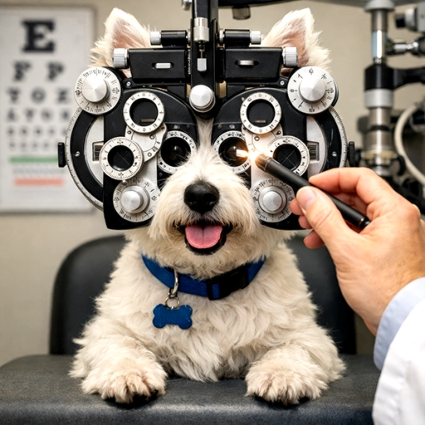
Understanding Eye Problems in West
Highland White Terriers
Your Westie’s eyes are an important part of how they explore the
world and connect with you. Because West Highland White
Terriers can develop certain eye problems, it helps to know which
warning signs deserve attention. This article explains common eye
issues in Westies, possible symptoms, treatment options, estimated
costs, prevention strategies, and why prompt veterinary care
matters.
Common Eye Problems in Westies
Westies can develop several eye conditions. The problems below are helpful for owners to recognize, but only a veterinarian can
determine the exact cause of symptoms and recommend the right treatment.
Cataracts
Cataracts occur when the lens of the eye becomes cloudy, which can interfere with vision and may eventually lead to blindness.
In Westies, cataracts may develop because of genetics, aging, or underlying health problems such as diabetes. Signs can include
a bluish or cloudy look in the eye, bumping into objects, hesitation in unfamiliar places, or reluctance to explore.
Our first Westie, Scottie, is a personal example of how suddenly cataracts can change a dog’s life. Scottie had a severe case of
diabetes that we did not know about until one day he walked into my wife’s leg, and we realized he had been blinded by
cataracts. Because we had pet insurance, we were able to take him to a veterinary ophthalmologist in Atlanta. She removed the
cataracts and replaced the lenses with prescription implants, which restored Scottie’s vision. The insurance covered almost all
of the cost, and that experience showed us how valuable early veterinary care and good insurance coverage can be.
Treatment Options
•
Surgery is often needed to restore vision, typically performed by a veterinary ophthalmologist.
•
Medical management may be used for mild cases or to delay progression.
Estimated Costs
Cataract surgery may range from $2,000 - $4,000 per eye, including preoperative testing and postoperative care. Costs
vary by location, specialist, testing needs, and follow-up requirements.
Dry Eye (Keratoconjunctivitis Sicca)
Dry eye occurs when the eyes do not produce enough tears, leading to irritation, redness, thick discharge, and possible
corneal damage. Westies may inherit this condition or develop it after illness, injury, or certain medications. Signs can
include frequent blinking, squinting, eye discharge, redness, or rubbing at the face.
Treatment Options
Dry eye often requires lifelong management with prescription eye drops, such as cyclosporine or tacrolimus, along
with artificial tears and treatment for any secondary infection your veterinarian identifies.
Estimated Costs
Initial diagnosis may cost $100 - $300. Monthly medication may cost $30–$60 or more, depending on the prescription,
pharmacy, and follow-up schedule.
Progressive Retinal Atrophy (PRA)
Progressive Retinal Atrophy, or PRA, is an inherited condition that causes gradual degeneration of the retina. Symptoms
often begin with night blindness and may progress to significant vision loss or blindness. There is no cure, but early
diagnosis can help you adjust your Westie’s home and routines so they can remain comfortable and confident.
Treatment Options
•
No medical or surgical treatment exists for PRA.
•
Supportive care, environmental modifications, and regular veterinary monitoring are essential.
Estimated Costs
Diagnosis may require specialized testing costing about $300 - $600. Ongoing care usually focuses on monitoring and
home adaptation, but costs can vary based on your veterinarian’s recommendations.
Glaucoma
Glaucoma occurs when pressure inside the eye becomes too high, which can cause pain and vision loss. Westies may
develop glaucoma because of inherited risk or secondary causes such as inflammation, injury, or other eye disease.
Warning signs can include redness, cloudiness, excessive tearing, squinting, an enlarged-looking eye, or signs that your dog
is uncomfortable.
Treatment Options
Treatment may include pressure-lowering eye drops, pain relief, and sometimes surgery to help preserve vision or
relieve pain.
Estimated Costs
Initial evaluation may cost $150 - $400. Medications may cost $50–$150 per month. Surgery, if needed, may range
from $1,000 to $3,000 per eye, depending on the procedure and specialist care required.
Corneal Ulcers
Corneal ulcers are open sores on the surface of the eye, often caused by injury, dry eye, infection, or irritation. Signs can
include squinting, pawing at the eye, redness, tearing, discharge, or keeping the eye partly closed. Prompt treatment is
important because ulcers can worsen quickly and may threaten vision.
Treatment Options
•
Medical treatment includes antibiotic eye drops, pain relief, and protective collars.
•
Severe cases may require surgical procedures such as corneal grafts.
Estimated Costs
Diagnosis and initial treatment may cost $200 - $500. Surgical care, if required, may cost $1,000–$2,000 or more
depending on severity, procedure type, and follow-up needs.
Cherry Eye
Cherry eye occurs when the gland of the third eyelid slips out of place, creating a pink or red mass in the corner of the eye.
It is more common in young dogs and can cause irritation, dryness, or infection if not treated.
Treatment Options
•
Surgical repositioning of the gland is the preferred treatment.
•
Medical management with anti-inflammatory drops may provide temporary relief.
Estimated Costs
Surgery typically ranges from $800 - $1,500 per affected eye, including anesthesia and follow-up care. Costs can vary
depending on clinic, location, and whether additional treatment is needed.
Prevention Strategies
Not every eye problem can be prevented, but steady, proactive care can help protect your Westie’s comfort and vision. Helpful
habits include:
•
Regular veterinary eye exams—at least once a year
•
Prompt attention to any signs of irritation, discharge, or vision changes
•
Maintaining proper hygiene around the eyes
•
Protecting your Westie from environmental hazards such as dust, sharp objects, and harsh chemicals
•
Using only veterinarian-approved medications and supplements
•
Breeding from health-tested parents to reduce genetic risks
A quick look at your Westie’s eyes once a week is a good habit, along with regular veterinary wellness exams. Check more often if
your dog has diabetes, past eye problems, allergies, or any recent signs of irritation or vision changes. Call your veterinarian
promptly if you notice sudden cloudiness, redness, swelling, discharge, squinting, injury, or signs of pain.
Quick Eye-Check Checklist
•
Look for cloudiness, redness, swelling, or discharge.
•
Notice whether your Westie bumps into furniture, hesitates on steps, or seems unsure in dim light.
•
Watch for squinting, pawing at the eye, rubbing the face, or keeping one eye partly closed.
•
Compare both eyes for differences in size, color, shine, or comfort.
•
Call your veterinarian promptly if anything looks new, unusual, painful, or concerning.
The Importance of Veterinary Involvement
Your veterinarian is your best partner in protecting your Westie’s eye health. Eye symptoms can look similar even when the causes
are very different, so professional diagnosis is important. Trying to treat eye problems at home or waiting too long can lead to pain,
complications, or permanent vision loss. If you notice redness, cloudiness, discharge, squinting, swelling, injury, or changes in
behavior, schedule veterinary care promptly.
Caring for your Westie’s eyes is one more way to protect the active, curious life you love sharing together. By learning the warning
signs, seeking veterinary help early, and keeping up with preventive care, you can support your Westie’s comfort, vision, and overall
well-being. When something does not look right, trust your instincts and call your veterinarian.