Copyright © 2025
George R. Morgan
Common Ear Problems: Types and Causes
Westies can develop ear problems, especially when allergies, moisture, wax buildup, mites, foreign material, or infection are
involved. Only a veterinarian can determine whether symptoms are caused by yeast, bacteria, parasites, allergies, injury, or another
condition. Common ear concerns include:
•
Ear infections caused by bacteria or yeast
•
Allergy-related ear inflammation
•
Ear mites or other parasitesWax buildup, moisture irritation, or trapped debris
•
Foreign material, injury, or chronic recurrent ear disease
Warning Signs of Ear Trouble
Recognizing these signs early can help your Westie get prompt treatment and avoid complications. Symptoms may be easier to
manage when they are addressed before pain, swelling, or infection becomes severe.
•
Frequent head shaking or tilting
•
Scratching or pawing at the ears
•
Redness, swelling, or a foul smell coming from the ear
•
Discharge—often brown, yellow, or bloody
•
Sensitivity or discomfort when the ears are touched
•
Hearing loss or changes in behavior, such as irritability
How Ear Problems Are Diagnosed
Your veterinarian may examine the ear canal, check whether the eardrum appears intact when possible, perform ear cytology to
look for yeast, bacteria, or inflammation, check for mites, and recommend culture and sensitivity testing for persistent, severe, or
recurring infections.
Treatment Options: Professional Care and Home Management
If you notice symptoms of ear problems, schedule a veterinary checkup promptly. Treatment depends on the cause and may include
prescription ear drops, oral medication, ear cleaning, parasite treatment, allergy management, pain relief, or follow-up exams.
Some ear medications should not be used if the eardrum may be damaged unless your veterinarian specifically directs it. Never
attempt to treat severe ear problems at home, as improper care can worsen pain, infection, or injury.
Our Westie Minnie often has ear issues related to her allergies. When we see her scratching at her ears or shaking her head, we use
veterinarian-prescribed ear drops exactly as directed. The drops have a special tip designed for dogs, and our veterinarian
explained that a dog’s ear canal is longer and shaped differently than a human ear canal, so the medication can be applied as
directed and reach the intended area safely. He also cautioned us not to use ear drops or other medications made for people. Even
when human and veterinary products have similar trade names, the formulations may not be the same, and the wrong product
could make the problem worse.
Associated Costs: Typical Expenses for Treatment
The cost of ear care can vary widely depending on the clinic, region, severity, diagnostics, medications, cultures, sedation, and
follow-up needs. A basic veterinary exam may range from about $50 to $150 or more. Diagnostic tests, such as ear cytology or
cultures, may add $30 to $80 or more. Prescription medications or ear cleaners often cost $20 to $60 or more. Chronic or severe
cases may require repeat visits, allergy management, or additional testing.
Importance of Ear Cleaning: Preventive Care and Best Practices
Ear cleaning can help some Westies, but it should be done only as recommended by your veterinarian. Over-cleaning or using the
wrong product can irritate the ear canal. Use only veterinarian-approved ear cleaning solutions and ask how often your Westie’s
ears should be cleaned, especially if allergies, moisture, wax buildup, or recurring infections are involved.
Veterinary Checkups: The Role in Maintaining Ear Health
Routine veterinary checkups are important for maintaining your Westie’s ear health. Your veterinarian can detect early signs of
problems, provide professional cleaning when needed, and offer advice tailored to your dog’s allergies, lifestyle, grooming routine,
and medical history.
Safe Ear Cleaning: What Owners Should and Should Not Do
Do not insert cotton swabs, fingers, or objects into your Westie’s ear canal. Doing so can injure delicate tissue, push debris deeper,
or worsen pain and infection. Gentle outer-ear cleaning may be appropriate if your veterinarian shows you how, but deep cleaning
or removal of foreign objects should be handled by a veterinarian.
At-Home Ear Check Checklist
•
Check for odor, redness, swelling, discharge, or excess wax.
•
Watch for head shaking, scratching, pawing, or pain when the ears are touched.
•
Notice head tilt, balance problems, hearing changes, or sudden behavior changes.
•
Keep ears dry after bathing or swimming and monitor after grooming.
•
Call your veterinarian if symptoms are painful, persistent, worsening, or unusual for your dog.
Prevention and Supportive Care
Helpful habits include keeping ears dry after bathing, managing allergies, using only veterinarian-approved cleaners, avoiding
objects in the ear canal, monitoring after grooming, and asking your veterinarian how often your Westie’s ears should be checked
or cleaned.
A Final Word on Ear Health
If your Westie’s ears look painful, smell unusual, or keep bothering them, call your veterinarian. Ear problems are easier to manage
when they are treated early and safely. With careful observation, safe cleaning habits, and regular veterinary guidance, you can
help your Westie stay more comfortable.
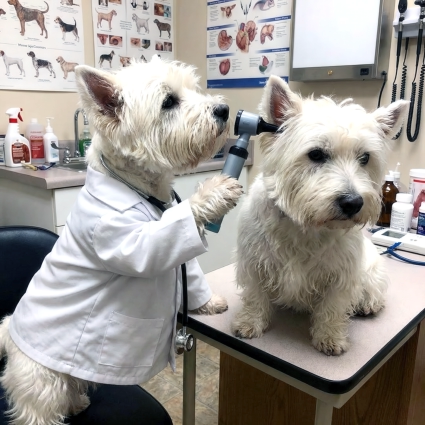
Understanding Ear Problems in West
Highland White Terriers
Ear problems can make a Westie uncomfortable quickly. This
guide helps owners recognize warning signs, understand common
causes, learn safe cleaning habits, consider possible costs, and
know when to seek veterinary care.
Common Ear Problems: Types and Causes
Westies can develop ear problems, especially when allergies, moisture, wax buildup, mites, foreign material, or infection are
involved. Only a veterinarian can determine whether symptoms are caused by yeast, bacteria, parasites, allergies, injury, or another
condition. Common ear concerns include:
•
Ear infections caused by bacteria or yeast
•
Allergy-related ear inflammation
•
Ear mites or other parasitesWax buildup, moisture irritation, or trapped debris
•
Foreign material, injury, or chronic recurrent ear disease
Warning Signs of Ear Trouble
Recognizing these signs early can help your Westie get prompt treatment and avoid complications. Symptoms may be easier to
manage when they are addressed before pain, swelling, or infection becomes severe.
•
Frequent head shaking or tilting
•
Scratching or pawing at the ears
•
Redness, swelling, or a foul smell coming from the ear
•
Discharge—often brown, yellow, or bloody
•
Sensitivity or discomfort when the ears are touched
•
Hearing loss or changes in behavior, such as irritability
How Ear Problems Are Diagnosed
Your veterinarian may examine the ear canal, check whether the eardrum appears intact when possible, perform ear cytology to
look for yeast, bacteria, or inflammation, check for mites, and recommend culture and sensitivity testing for persistent, severe, or
recurring infections.
Treatment Options: Professional Care and Home Management
If you notice symptoms of ear problems, schedule a veterinary checkup promptly. Treatment depends on the cause and may include
prescription ear drops, oral medication, ear cleaning, parasite treatment, allergy management, pain relief, or follow-up exams.
Some ear medications should not be used if the eardrum may be damaged unless your veterinarian specifically directs it. Never
attempt to treat severe ear problems at home, as improper care can worsen pain, infection, or injury.
Our Westie Minnie often has ear issues related to her allergies. When we see her scratching at her ears or shaking her head, we use
veterinarian-prescribed ear drops exactly as directed. The drops have a special tip designed for dogs, and our veterinarian
explained that a dog’s ear canal is longer and shaped differently than a human ear canal, so the medication can be applied as
directed and reach the intended area safely. He also cautioned us not to use ear drops or other medications made for people. Even
when human and veterinary products have similar trade names, the formulations may not be the same, and the wrong product
could make the problem worse.
Associated Costs: Typical Expenses for Treatment
The cost of ear care can vary widely depending on the clinic, region, severity, diagnostics, medications, cultures, sedation, and
follow-up needs. A basic veterinary exam may range from about $50 to $150 or more. Diagnostic tests, such as ear cytology or
cultures, may add $30 to $80 or more. Prescription medications or ear cleaners often cost $20 to $60 or more. Chronic or severe
cases may require repeat visits, allergy management, or additional testing.
Importance of Ear Cleaning: Preventive Care and Best Practices
Ear cleaning can help some Westies, but it should be done only as recommended by your veterinarian. Over-cleaning or using the
wrong product can irritate the ear canal. Use only veterinarian-approved ear cleaning solutions and ask how often your Westie’s
ears should be cleaned, especially if allergies, moisture, wax buildup, or recurring infections are involved.
Veterinary Checkups: The Role in Maintaining Ear Health
Routine veterinary checkups are important for maintaining your Westie’s ear health. Your veterinarian can detect early signs of
problems, provide professional cleaning when needed, and offer advice tailored to your dog’s allergies, lifestyle, grooming routine,
and medical history.
Safe Ear Cleaning: What Owners Should and Should Not Do
Do not insert cotton swabs, fingers, or objects into your Westie’s ear canal. Doing so can injure delicate tissue, push debris deeper,
or worsen pain and infection. Gentle outer-ear cleaning may be appropriate if your veterinarian shows you how, but deep cleaning
or removal of foreign objects should be handled by a veterinarian.
At-Home Ear Check Checklist
•
Check for odor, redness, swelling, discharge, or excess wax.
•
Watch for head shaking, scratching, pawing, or pain when the ears are touched.
•
Notice head tilt, balance problems, hearing changes, or sudden behavior changes.
•
Keep ears dry after bathing or swimming and monitor after grooming.
•
Call your veterinarian if symptoms are painful, persistent, worsening, or unusual for your dog.
Prevention and Supportive Care
Helpful habits include keeping ears dry after bathing, managing allergies, using only veterinarian-approved cleaners, avoiding
objects in the ear canal, monitoring after grooming, and asking your veterinarian how often your Westie’s ears should be checked
or cleaned.
A Final Word on Ear Health
If your Westie’s ears look painful, smell unusual, or keep bothering them, call your veterinarian. Ear problems are easier to manage
when they are treated early and safely. With careful observation, safe cleaning habits, and regular veterinary guidance, you can
help your Westie stay more comfortable.