Copyright © 2025
George R. Morgan
Understanding Dental Disease in Westies
Small breeds, including Westies, can be prone to dental problems. Dental disease often begins when plaque builds up on the teeth
and hardens into tartar. This can irritate the gums, leading to gingivitis, and may progress to periodontitis, loose or painful teeth,
tooth root infections, abscesses, and other problems if not treated.
Common dental concerns in dogs include plaque and tartar, gingivitis, periodontitis, fractured teeth, retained baby teeth, tooth root
abscesses, oral pain, and loose or missing teeth. Bad breath, red or swollen gums, difficulty chewing, visible tartar, or changes in
eating habits should be taken seriously because dental pain is not always obvious.
Warning Signs of Dental Trouble
Bad breath that does not improve
Red, swollen, or bleeding gums
Yellow or brown tartar on the teeth
Drooling, pawing at the mouth, or chewing on one side
Dropping food, avoiding hard food, loose teeth, or facial swelling
Risks and Consequences: Impact of Poor Dental Health
Ignoring dental health in Westies can have serious consequences. Untreated dental disease can lead to pain, tooth loss, infection, and
difficulty eating. Oral infection and inflammation may also contribute to broader health problems and can be harder on dogs with
other medical conditions.
Dental pain can also affect behavior. A Westie with mouth pain may become irritable, withdrawn, less playful, or reluctant to eat.
Regular dental care supports comfort, appetite, and quality of life.
Prevention and Maintenance: Daily Care and Recommended Practices
Preventing dental disease starts with regular home care. Use dog toothpaste only, never human toothpaste, and introduce brushing
slowly with praise and rewards. A soft toothbrush, finger brush, or gauze-wrapped finger can help your Westie get used to the
routine. Daily brushing is ideal, but brushing several times a week is still helpful if daily care is not realistic. Dental chews and toys
may help, but they should be size-appropriate, supervised, and recommended by your veterinarian.
Consistency is key. Establishing a routine early can make dental care easier, but older dogs can learn gradually too. Some
veterinary dental diets or approved dental chews may help reduce plaque and tartar, but they do not replace brushing or veterinary
cleanings. Regular veterinary checkups should include oral exams so your veterinarian can monitor for early signs of disease and
recommend care as needed.
Veterinary Dental Cleanings: Frequency, Procedures, and Benefits
Professional dental cleanings allow your veterinarian to remove plaque and tartar above and below the gumline, polish the teeth,
and assess gum health. These cleanings are usually performed under anesthesia so the mouth can be examined and cleaned safely
and thoroughly. Dental X-rays may reveal disease below the gumline, and extractions may be needed for painful, loose, fractured,
or severely diseased teeth.
Non-anesthetic dental scaling may make teeth look cleaner, but it does not replace a veterinary dental cleaning because it cannot
properly clean below the gumline or evaluate hidden disease with dental X-rays.
In our own experience, four of our five dogs eventually lost a tooth at some point. Our veterinarian told us that this was not unusual
and reassured us that we were doing the right thing by keeping up with annual dental cleanings and home brushing. Those
cleanings, along with regular brushing at home, were among the best ways to reduce the risk of future tooth loss and keep their
mouths as healthy and comfortable as possible.
Many dogs benefit from annual dental exams and cleanings when recommended, while some need more or less frequent care
depending on their mouth, age, health, and home-care routine. Anesthesia risk should be discussed with your veterinarian,
especially for older dogs or dogs with other medical conditions.
At-Home Dental Check Checklist
Check your Westie’s breath, gums, teeth, and chewing habits regularly.
Look for tartar, redness, swelling, bleeding, loose teeth, or broken teeth.
Watch for drooling, pawing at the mouth, dropping food, or chewing on one side.
Call your veterinarian if you notice pain, bleeding, loose teeth, facial swelling, or sudden eating changes.
Pet Insurance Coverage: An Overview of Benefits for Dental Care
Pet insurance dental coverage varies widely. Some plans may offer wellness coverage for routine cleanings, while others may cover
dental illness, accidents, extractions, or treatment for dental disease differently. Review exclusions, waiting periods, deductibles,
reimbursement rates, pre-existing dental disease rules, and any requirements for proof of routine dental care before relying on
coverage.
A Final Word on Dental Health
Good dental care can help your Westie stay comfortable, eat well, and enjoy daily life. By building a realistic brushing routine,
watching for warning signs, scheduling veterinary dental exams, and discussing professional cleanings when needed, you can
protect your dog’s mouth and overall well-being. If something about your Westie’s mouth seems painful, unusual, or concerning,
call your veterinarian.


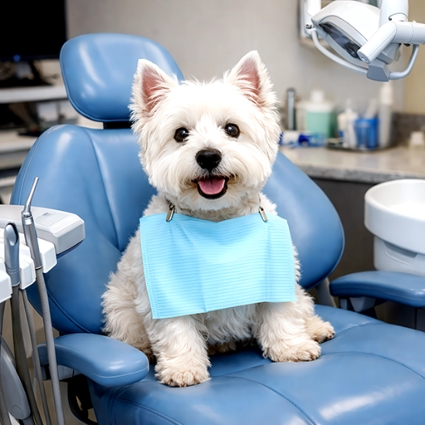
Dental Disease in Westies
Understanding, Preventing, and Managing Oral Health for Your Westie
Dental health affects your Westie’s comfort, appetite, and overall
well-being. This guide helps owners recognize signs of dental
disease, understand prevention and professional cleanings,
consider possible costs and insurance coverage, and know when to
seek veterinary care.
Understanding Dental Disease in Westies
Small breeds, including Westies, can be prone to dental problems. Dental disease often begins when plaque builds up on the teeth
and hardens into tartar. This can irritate the gums, leading to gingivitis, and may progress to periodontitis, loose or painful teeth,
tooth root infections, abscesses, and other problems if not treated.
Common dental concerns in dogs include plaque and tartar, gingivitis, periodontitis, fractured teeth, retained baby teeth, tooth root
abscesses, oral pain, and loose or missing teeth. Bad breath, red or swollen gums, difficulty chewing, visible tartar, or changes in
eating habits should be taken seriously because dental pain is not always obvious.
Warning Signs of Dental Trouble
Bad breath that does not improve
Red, swollen, or bleeding gums
Yellow or brown tartar on the teeth
Drooling, pawing at the mouth, or chewing on one side
Dropping food, avoiding hard food, loose teeth, or facial swelling
Risks and Consequences: Impact of Poor Dental Health
Ignoring dental health in Westies can have serious consequences. Untreated dental disease can lead to pain, tooth loss, infection, and
difficulty eating. Oral infection and inflammation may also contribute to broader health problems and can be harder on dogs with
other medical conditions.
Dental pain can also affect behavior. A Westie with mouth pain may become irritable, withdrawn, less playful, or reluctant to eat.
Regular dental care supports comfort, appetite, and quality of life.
Prevention and Maintenance: Daily Care and Recommended Practices
Preventing dental disease starts with regular home care. Use dog toothpaste only, never human toothpaste, and introduce brushing
slowly with praise and rewards. A soft toothbrush, finger brush, or gauze-wrapped finger can help your Westie get used to the
routine. Daily brushing is ideal, but brushing several times a week is still helpful if daily care is not realistic. Dental chews and toys
may help, but they should be size-appropriate, supervised, and recommended by your veterinarian.
Consistency is key. Establishing a routine early can make dental care easier, but older dogs can learn gradually too. Some
veterinary dental diets or approved dental chews may help reduce plaque and tartar, but they do not replace brushing or veterinary
cleanings. Regular veterinary checkups should include oral exams so your veterinarian can monitor for early signs of disease and
recommend care as needed.
Veterinary Dental Cleanings: Frequency, Procedures, and Benefits
Professional dental cleanings allow your veterinarian to remove plaque and tartar above and below the gumline, polish the teeth,
and assess gum health. These cleanings are usually performed under anesthesia so the mouth can be examined and cleaned safely
and thoroughly. Dental X-rays may reveal disease below the gumline, and extractions may be needed for painful, loose, fractured,
or severely diseased teeth.
Non-anesthetic dental scaling may make teeth look cleaner, but it does not replace a veterinary dental cleaning because it cannot
properly clean below the gumline or evaluate hidden disease with dental X-rays.
In our own experience, four of our five dogs eventually lost a tooth at some point. Our veterinarian told us that this was not unusual
and reassured us that we were doing the right thing by keeping up with annual dental cleanings and home brushing. Those
cleanings, along with regular brushing at home, were among the best ways to reduce the risk of future tooth loss and keep their
mouths as healthy and comfortable as possible.
Many dogs benefit from annual dental exams and cleanings when recommended, while some need more or less frequent care
depending on their mouth, age, health, and home-care routine. Anesthesia risk should be discussed with your veterinarian,
especially for older dogs or dogs with other medical conditions.
At-Home Dental Check Checklist
Check your Westie’s breath, gums, teeth, and chewing habits regularly.
Look for tartar, redness, swelling, bleeding, loose teeth, or broken teeth.
Watch for drooling, pawing at the mouth, dropping food, or chewing on one side.
Call your veterinarian if you notice pain, bleeding, loose teeth, facial swelling, or sudden eating changes.
Pet Insurance Coverage: An Overview of Benefits for Dental Care
Pet insurance dental coverage varies widely. Some plans may offer wellness coverage for routine cleanings, while others may cover
dental illness, accidents, extractions, or treatment for dental disease differently. Review exclusions, waiting periods, deductibles,
reimbursement rates, pre-existing dental disease rules, and any requirements for proof of routine dental care before relying on
coverage.
A Final Word on Dental Health
Good dental care can help your Westie stay comfortable, eat well, and enjoy daily life. By building a realistic brushing routine,
watching for warning signs, scheduling veterinary dental exams, and discussing professional cleanings when needed, you can
protect your dog’s mouth and overall well-being. If something about your Westie’s mouth seems painful, unusual, or concerning,
call your veterinarian.