Copyright © 2025
George R. Morgan
Keeping Westies Active
Westies may be small, but they are lively terriers who benefit from
regular opportunities to move, sniff, play, and think. The right
amount and type of activity depends on the individual dog’s age,
health, mobility, fitness, and interests. This page explains why
movement and mental engagement matter, offers practical outdoor
and indoor options, and explores adaptive ideas—including carefully
supervised treadmill use—for owners who face barriers to traditional
walks.
Understanding Westie Energy and Temperament
Westies were originally bred in Scotland to pursue small game, so many still show curiosity, persistence, quick reactions, and enthusiasm for
exploring. Those terrier traits can make walks, sniffing games, play, and short training sessions especially appealing. Activity should still be
tailored to the individual dog, because energy level, stamina, and interests vary with age, health, mobility, fitness, and personality.
There is no single daily exercise target that fits every Westie. A healthy adult may enjoy a combination of walks, play, sniffing, and training
spread throughout the day, while puppies, seniors, and dogs with health or mobility concerns need different pacing and recovery time.
Watch how your Westie responds during and after activity, and ask your veterinarian to help set appropriate limits if your dog has a medical
condition, is returning to exercise, or shows pain, stiffness, coughing, unusual fatigue, or reluctance to move.
Health Benefits of Regular Exercise
Regular, appropriate movement can help a Westie maintain a healthy weight, preserve muscle, and keep joints moving comfortably. Exercise
needs to match the dog, however: too little activity may contribute to weight gain and deconditioning, while too much intensity or repetitive
impact can aggravate pain or injury. Because Westies can develop orthopedic and other health problems, ask your veterinarian about
suitable activities if your dog limps, becomes stiff, tires unusually quickly, has difficulty breathing, or has been diagnosed with a joint, heart,
respiratory, or neurological condition.
Behavioral Benefits of Exercise
Physical activity and mental enrichment can help a Westie settle by providing healthy outlets for energy and curiosity. Walks, sniffing, play,
and training may reduce behaviors linked to boredom or excess energy, and shared activities can strengthen the bond between dog and
owner. Persistent fear, anxiety, destructive behavior, or sudden behavior changes need their own assessment; more exercise alone may not
resolve them and can sometimes add stress if the activity is too intense or poorly matched to the dog.
Traditional Exercise Methods: Walks, Playtime, and Outdoor Activities
Daily walks give Westies opportunities to move, explore, and use their noses. Because terriers may react quickly to wildlife or other
distractions, use secure, well-fitted walking equipment and keep your Westie leashed unless you are in a safely enclosed area. Backyard play,
fetch, and tug can provide additional activity. Dog parks are not appropriate for every dog; consider your Westie’s comfort around
unfamiliar dogs, vaccination status, recall, and play style, and leave if interactions become tense or overwhelming.
Adjust activity for heat, humidity, cold, rain, and surface conditions. Hot pavement can burn paws, and warm, humid weather can increase
the risk of overheating. Carry water when appropriate, choose cooler times of day, and stop if your Westie shows excessive panting, unusual
slowing, weakness, confusion, limping, or difficulty breathing. In cold or wet conditions, shorten outings when needed and dry the coat and
paws afterward.
Agility courses and basic obedience training can also serve as excellent outlets for Westies’ intelligence and energy. These activities not only
challenge their minds but also build trust and communication between dog and owner. If possible, rotating exercise routines prevents
boredom and keeps your Westie engaged in the long term.
Challenges for Owners with Disabilities: Addressing Common Barriers
Not every owner can provide long outdoor walks, and that does not mean they are failing their Westie. Disability, chronic illness, mobility
limitations, unsafe terrain, and difficult weather can all change what exercise is practical. The goal is to build a routine that works for both
dog and owner, using safe alternatives such as indoor games, scent work, short training sessions, help from trusted people, or professionally
guided equipment. Your veterinarian can help match the plan to your Westie’s health and abilities.
Treadmills as a Solution: How Treadmills Work for Dogs
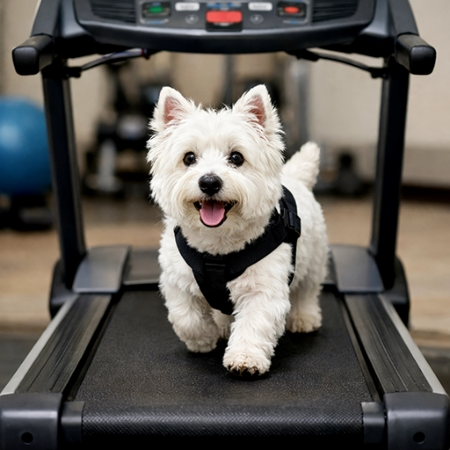
A dog treadmill may provide controlled indoor movement when weather, mobility, or other circumstances limit outdoor activity. It should
supplement—not replace—sniffing, social contact, play, training, and opportunities to explore. Dog-specific models may offer useful features
such as low entry height, side rails, and adjustable speed, but suitability depends on the individual dog and machine. Ask your veterinarian
before beginning treadmill work, especially if your Westie has joint, back, heart, breathing, balance, or neurological concerns.
Introduce the treadmill only when your Westie can step on and off comfortably while it is turned off. Reward calm investigation, then begin
at the slowest speed for only a few moments while standing close enough to stop the machine immediately. Keep the dog centered, watch the
feet and gait, and end the session before fatigue or anxiety appears. Never tether a dog to the treadmill, never leave a dog unattended, and
never force a reluctant dog to continue. Provide water after the session and allow time to cool down.
A treadmill can add consistency when weather or an owner’s mobility limits other options, but not every Westie will enjoy or tolerate it. If
your dog remains reluctant, fearful, or uncomfortable despite a patient introduction, choose another form of activity rather than forcing
treadmill use.
Safety Tips and Training Advice for Treadmill Use
To make using a treadmill a safe and rewarding experience for your Westie, follow these guidelines:
Use only a stable treadmill that is appropriately sized for your Westie, has a low entry point, provides enough belt length for a natural
stride, and can be stopped immediately.
Keep cords, loose objects, children, and other pets away during use.
Check the belt, rails, and moving parts before every session.
Stop at once if your Westie stumbles, drifts backward, changes gait, pants heavily, slows unexpectedly, or tries to leave.
Ask your veterinarian before starting treadmill work, particularly if your Westie has health concerns or is returning to exercise. If the
treadmill does not suit your dog, use another safe indoor or assisted activity instead.
Other Adaptive Exercise Options: Indoor Games and Enrichment Activities
Indoor enrichment can support both movement and mental engagement. Treat-dispensing toys and snuffle mats encourage sniffing and
problem-solving, while hallway fetch, hide-and-seek, gentle tug, short training circuits, and carefully arranged obstacle games can add more
physical activity in a small space. Choose activities that suit your Westie’s age, health, footing, and confidence, and avoid slippery floors,
high jumps, sharp turns, or obstacles that could cause a fall.
We saw this with Minnie when we bought a puzzle-style treat toy that hid small treats under different movable pieces. She was captivated by
the challenge and kept working at it until she figured out how to move the pieces and reach the treats. For her, the reward was built right
into the activity, and it was a good reminder that mental exercise can be just as engaging as physical movement.
Scent work is another excellent option for Westies, who have keen noses and love to “hunt.” Hide treats around the house and encourage
your dog to find them, which satisfies their natural instincts and provides gentle exercise. Short training sessions with basic commands or
tricks can also break up the day and reinforce positive behaviors.
For owners with limited mobility, enlisting friends, family members, or professional dog walkers on occasion can help supplement your
Westie’s exercise routine. The goal is consistency and variety, providing daily opportunities for movement, exploration, and engagement, in
whatever ways work best for you and your dog.
Conclusion: Encouragement for Every Westie Owner
Westies often enjoy an active life, but a good routine is not measured by a single number of minutes or miles. It is built around the individual
dog’s health, age, mobility, interests, and response to activity. Walks, sniffing, play, training, indoor games, help from trusted people, and
carefully supervised treadmill work can all contribute. What matters is providing safe, regular opportunities to move and think while
adjusting the plan whenever your Westie shows fatigue, discomfort, fear, or changing health needs.
The goal is not perfection. It is a steady, thoughtful routine that helps your Westie feel engaged, supported, and loved. Whether that means a
neighborhood walk, a game in the hallway, a few minutes of scent work, or careful treadmill practice, every safe effort counts.
Understanding Westie Energy and Temperament
Westies were originally bred in Scotland to pursue small game, so many still show curiosity, persistence, quick reactions, and enthusiasm for
exploring. Those terrier traits can make walks, sniffing games, play, and short training sessions especially appealing. Activity should still be
tailored to the individual dog, because energy level, stamina, and interests vary with age, health, mobility, fitness, and personality.
There is no single daily exercise target that fits every Westie. A healthy adult may enjoy a combination of walks, play, sniffing, and training
spread throughout the day, while puppies, seniors, and dogs with health or mobility concerns need different pacing and recovery time.
Watch how your Westie responds during and after activity, and ask your veterinarian to help set appropriate limits if your dog has a medical
condition, is returning to exercise, or shows pain, stiffness, coughing, unusual fatigue, or reluctance to move.
Health Benefits of Regular Exercise
Regular, appropriate movement can help a Westie maintain a healthy weight, preserve muscle, and keep joints moving comfortably. Exercise
needs to match the dog, however: too little activity may contribute to weight gain and deconditioning, while too much intensity or repetitive
impact can aggravate pain or injury. Because Westies can develop orthopedic and other health problems, ask your veterinarian about
suitable activities if your dog limps, becomes stiff, tires unusually quickly, has difficulty breathing, or has been diagnosed with a joint, heart,
respiratory, or neurological condition.
Behavioral Benefits of Exercise
Physical activity and mental enrichment can help a Westie settle by providing healthy outlets for energy and curiosity. Walks, sniffing, play,
and training may reduce behaviors linked to boredom or excess energy, and shared activities can strengthen the bond between dog and
owner. Persistent fear, anxiety, destructive behavior, or sudden behavior changes need their own assessment; more exercise alone may not
resolve them and can sometimes add stress if the activity is too intense or poorly matched to the dog.
Traditional Exercise Methods: Walks, Playtime, and Outdoor Activities
Daily walks give Westies opportunities to move, explore, and use their noses. Because terriers may react quickly to wildlife or other
distractions, use secure, well-fitted walking equipment and keep your Westie leashed unless you are in a safely enclosed area. Backyard play,
fetch, and tug can provide additional activity. Dog parks are not appropriate for every dog; consider your Westie’s comfort around
unfamiliar dogs, vaccination status, recall, and play style, and leave if interactions become tense or overwhelming.
Adjust activity for heat, humidity, cold, rain, and surface conditions. Hot pavement can burn paws, and warm, humid weather can increase
the risk of overheating. Carry water when appropriate, choose cooler times of day, and stop if your Westie shows excessive panting, unusual
slowing, weakness, confusion, limping, or difficulty breathing. In cold or wet conditions, shorten outings when needed and dry the coat and
paws afterward.
Agility courses and basic obedience training can also serve as excellent outlets for Westies’ intelligence and energy. These activities not only
challenge their minds but also build trust and communication between dog and owner. If possible, rotating exercise routines prevents
boredom and keeps your Westie engaged in the long term.
Challenges for Owners with Disabilities: Addressing Common Barriers
Not every owner can provide long outdoor walks, and that does not mean they are failing their Westie. Disability, chronic illness, mobility
limitations, unsafe terrain, and difficult weather can all change what exercise is practical. The goal is to build a routine that works for both
dog and owner, using safe alternatives such as indoor games, scent work, short training sessions, help from trusted people, or professionally
guided equipment. Your veterinarian can help match the plan to your Westie’s health and abilities.
Treadmills as a Solution: How Treadmills Work for Dogs
A dog treadmill may provide controlled indoor movement when weather, mobility, or other circumstances limit outdoor activity. It should
supplement—not replace—sniffing, social contact, play, training, and opportunities to explore. Dog-specific models may offer useful features
such as low entry height, side rails, and adjustable speed, but suitability depends on the individual dog and machine. Ask your veterinarian
before beginning treadmill work, especially if your Westie has joint, back, heart, breathing, balance, or neurological concerns.
Introduce the treadmill only when your Westie can step on and off comfortably while it is turned off. Reward calm investigation, then begin
at the slowest speed for only a few moments while standing close enough to stop the machine immediately. Keep the dog centered, watch the
feet and gait, and end the session before fatigue or anxiety appears. Never tether a dog to the treadmill, never leave a dog unattended, and
never force a reluctant dog to continue. Provide water after the session and allow time to cool down.
A treadmill can add consistency when weather or an owner’s mobility limits other options, but not every Westie will enjoy or tolerate it. If
your dog remains reluctant, fearful, or uncomfortable despite a patient introduction, choose another form of activity rather than forcing
treadmill use.
Safety Tips and Training Advice for Treadmill Use
To make using a treadmill a safe and rewarding experience for your Westie, follow these guidelines:
Use only a stable treadmill that is appropriately sized for your Westie, has a low entry point, provides enough belt length for a natural
stride, and can be stopped immediately.
Keep cords, loose objects, children, and other pets away during use.
Check the belt, rails, and moving parts before every session.
Stop at once if your Westie stumbles, drifts backward, changes gait, pants heavily, slows unexpectedly, or tries to leave.
Ask your veterinarian before starting treadmill work, particularly if your Westie has health concerns or is returning to exercise. If the
treadmill does not suit your dog, use another safe indoor or assisted activity instead.
Other Adaptive Exercise Options: Indoor Games and Enrichment Activities
Indoor enrichment can support both movement and mental engagement. Treat-dispensing toys and snuffle mats encourage sniffing and
problem-solving, while hallway fetch, hide-and-seek, gentle tug, short training circuits, and carefully arranged obstacle games can add more
physical activity in a small space. Choose activities that suit your Westie’s age, health, footing, and confidence, and avoid slippery floors,
high jumps, sharp turns, or obstacles that could cause a fall.
We saw this with Minnie when we bought a puzzle-style treat toy that hid small treats under different movable pieces. She was captivated by
the challenge and kept working at it until she figured out how to move the pieces and reach the treats. For her, the reward was built right
into the activity, and it was a good reminder that mental exercise can be just as engaging as physical movement.
Scent work is another excellent option for Westies, who have keen noses and love to “hunt.” Hide treats around the house and encourage
your dog to find them, which satisfies their natural instincts and provides gentle exercise. Short training sessions with basic commands or
tricks can also break up the day and reinforce positive behaviors.
For owners with limited mobility, enlisting friends, family members, or professional dog walkers on occasion can help supplement your
Westie’s exercise routine. The goal is consistency and variety, providing daily opportunities for movement, exploration, and engagement, in
whatever ways work best for you and your dog.
Conclusion: Encouragement for Every Westie Owner
Westies often enjoy an active life, but a good routine is not measured by a single number of minutes or miles. It is built around the individual
dog’s health, age, mobility, interests, and response to activity. Walks, sniffing, play, training, indoor games, help from trusted people, and
carefully supervised treadmill work can all contribute. What matters is providing safe, regular opportunities to move and think while
adjusting the plan whenever your Westie shows fatigue, discomfort, fear, or changing health needs.
The goal is not perfection. It is a steady, thoughtful routine that helps your Westie feel engaged, supported, and loved. Whether that means a
neighborhood walk, a game in the hallway, a few minutes of scent work, or careful treadmill practice, every safe effort counts.